Thursday, July 31, 2008

super dell is annoying and crazy and everybody hates him

i've never liked super dell. he is annoying. for those of you who don't know of him, 'super dell schanze is a really really annoying ass (read donkey) who used to own a few computer shops here in utah. he had really annoying commercials which pretty much everybody hated. apparently his computer were pretty good though and he made a load of money to buy guns and open a gun shop so he could buy more guns. he liked to point his guns at people which led him to getting arrested. he is also really annoying.

eventually everybody in utah decided he was just too annoying and didn't want to buy his computers anymore. so he closed up his shop, blamed the news and threatened to kill them, and bought a powered paraglider to annoy people from the sky. pretty much everybody in utah hates him. the police hate him. his neighbors hate him. anybody who has ever watched tv or radio in utah hates him. the faa hates him. even wikipedia hates him. i know that god is supposed to be all loving, but i'll bet a dollar that even god hates him.

here is a list of other reasons to hate him
.

but apparently super dell isn't hated enough and he has decided to call citizens throughout utah and plead for them to hate him. he recently filed his intent to run for the governor of utah. this is the actual recording of his automated calls:


he used to remind me of my old friend cody who could be equally annoying, but super dell has long since far far far passed his annoyance level.

Monday, July 28, 2008

peeing on a brick wall

the transition from elementary school to middle school was at times an overwhelming experience. gone were recesses, a single teacher, and tote trays. instead we were suddenly bombarded with periods, several teachers, lockers, tardies, showers after gym class, french horns, mrs. coombs, a la carte lunches, designer clothes, and profanity that i never knew existed.

but those were not that big of a deal. when i realized i was in a different world - a much larger older world compared to little young me - was when i walked into the restroom during my first week and saw a 9th grader peeing on the wall. i knew he wasn't accidentally missing the urinal because it was 5 or 6 feet away from him. he was just there, facing the brick wall, watching his urine trickle across the tile floor into a small drain. i didn't know what to think. was this normal for 9th graders? is peeing on the wall the 'cool' thing to do? should i also be doing this to be accepted by my new peers? he then zipped up his pants, gave me this 'what are you looking at?' glare, and then proceeded to pick me up and throw me into a nearby locker outside.

ok. i made up that last part about being thrown into a locker; but trust me, that is what i was expecting to happen.

in just a month i'm going to be starting my next stage of education at claremont graduate university studying for a masters degree in philosophy of religion and theology. i can't help but feel like i'm moving into a new world that is going to be much older and larger than little young me. today i received a couple of syllabi for some courses i will be taking, and felt a little struck by the jump in requirements and expectations that are going to be thrown at me. even worse, i am am going to be a nobody in just a month. over the last few years in utah valley, i managed (with much help) to establish myself as a philosophy major to be somewhat reckoned with. my peers and instructors both knew and respected me. without trying to sound to braggish, i was a big fish in the little philosophy department here.

but in a month that will all change. no longer will i be someone that everyone knows. i'm going to be a nobody having to start over and hopefully make my place among those who are going to be far smarter and far better read than me. i can't help but imagine walking into a restroom during my first week to find a doctoral student standing up against the brick wall, watching his flow of urine stream across the floor into a nearby drain. will he also glare at me as i nervously wet myself in fear?

Sunday, July 27, 2008

tool + angels in america =

total awesomeness.

i used to [sorta] joke around that joseph smith's first vision and visitation of moroni were identical to reports of close encounters with aliens. i feel even more justified now.

(fyi - the song is 'rossetta stoned' by tool which is about someone being visted by aliens; the clips are from hbo's 'angels in america' which happens to also have mormonism as a key part of the story line).

Friday, July 25, 2008

sight-seeing in salt lake

well i woke up this morning and rode my bike to the trax station to take the bus to school, but when i got there i realized that it was a state holiday. no buses today and no school to take the bus to. instead, i hopped onto the north-bound trax to do some sightseeing in salt lake. i took a tour of temple square; watched the joseph smith movie (which i actually liked this time after i decided to ignore the historical inaccuracies and occasional terrible directing/scripting); and spent a few minutes at the gateway mall.

anyways... this is what i saw.

Wednesday, July 23, 2008

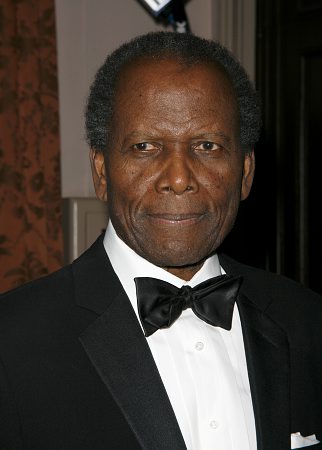
john SIDNEY mccain

among right-wing political pundits, there is a tendency to use barack HUSSEIN obama's middle name in an attempt to strike fear or disparage him by associating him with the former dictator of iraq.

listen to fox and friends' steve JAMES douchey for example:


or listen to radio talk show host bill BUTTWIPE cunningham introduce john SIDNEY mccain:


this tactic is not only used by pundits, but is also a common means of trying to attack obama by your run-of-the-mill ignorant redneck conservative hacks. compare the difference between the 31 benign search results of "john sidney mccain" and 870 malignant results of "barack hussein obama" in youtube.

but of course the usual reply by these hacks when confronted about this tactic is a defense that were not using his middle name in an attempt to associate him with saddam hussein and islam, but that they were just simply using his middle name because that is what his middle name is. this should then make us wonder why these same people don't follow the same protocal when referring to the republican candidate? why do we never hear of "john SIDNEY mccain" from the republican pundits? the reason why we don't hear it from them is the same reason why we hear so much of obama's middle name from them: name association.

when americans hear 'sidney' they think of two things:

and

that's right. it makes them think of culture and blacks. and if there are two things that john SIDNEY mccain needs to dissassociate himself from in order to win the hearts of his conservative white voting block, it is those two very things. there is a reason why john SIDNEY mccain is even more difficult to listen to than our current president and why blinks uncontrollably after poorly telling an already unfunny joke. those are marks of a lack of culture. do you think it was an accident that the media is well aware that john SIDNEY mccain called his wife a "c*nt" in public? no. again, this is an intentional plan by the john SIDNEY mccain campaign to tell the american voter that 'hey, i'm just like you. i also belittle my wife in public and call her a 'c*nt' (who i happened to begin courting while i was still married to my first wife).' respecting others, especially your wife, is a elitist and cultured ideology that says 'i'm better than the rest of you.' there is no way that john SIDNEY mccain would want to be associated with that.

the disassociation with black americans should be simple enough considering how white john SIDNEY mccain is (even his hair is as white as the stripes on the american flag). however, just to prove how white john SIDNEY mccain is, he spent decades fighting the memorialization of civil rights leader martin LUTHER king.

all this work to prove how uncultured and how unblack john SIDNEY mccain is can be undone with his middle name though. that is why there have been many within the republican inner-circles who have been pushing for their presidential nominee to legally change his name to john GOMER mccain. cuz if any name can best describe white and uncultured, it's 'gomer.'

Tuesday, July 22, 2008

a short sunday morning ride and a pretty stupid to bike bells canyon

sunday morning, i went up for a short ride up a service trail along the wasatch front. the trail finished at a way too short dead end. the view was nice though.

and then this morning, i had the stupid idea to bike bells canyon. because of the sandy and log-stepped 35%+ incline and all of the rocks and boulders, i spent more time carrying my bike than actually riding it. felt good though and ran into a few dear.

enjoy.


Sunday, July 20, 2008

problems of doctrine

for all of you who have been dying to see the finished product of my couple weeks of writing, you can read it here.

Tuesday, July 15, 2008

lds church admits that it should not call itself christian - or - oh the hypocrisy!

the following was presented as a commentary on the lds newsroom website - "the official resource for news media, opinion leaders, and the public.

It just doesn’t seem right that the LDS Church can overturn more than a millennium and a half of common usage simply by virtue of the fact that it established itself a millenium and a half after the Christian faith was born, and adopted many of its early principles. By declaring that any group professing Jesus Christ and the Bible can rightly be called Christian is akin to declaring that any religious group that Joseph Smith and the Book of Mormon can rightly call itself Mormon.
wow. i'm simply amazed.

Monday, July 14, 2008

the problem of the church and the negro (updated)

here's a little something i found and added to my paper...


This problem is not only for Millet’s and Oman’s models of determining doctrine, but lies at the heart of Mormon doctrine, truth, and modern revelatory authority. If a Church leader at T1 is supposed to be understood to be teaching true doctrine, and if any later Church leader at T2 could preach a revelation that supersedes or contradicts the previous leader, then theoretically any true doctrine at T1 can at a later T2 become a false doctrine. Similarly, any false doctrine condemned at T1 can be overturned and considered a true doctrine at T2.

A great example of this problem can be found in John Lewis Lund’s The Church and the Negro, published in 1967.

Brigham Young revealed that the Negroes will not received the Priesthood until a great while after the advent of Jesus Christ, whose coming will usher in a millennium of peace. . . .

In view of what President Young and others have said, it would be foolish indeed to give anyone the false idea that a new revelation is immediately forthcoming on the issue of the Negroes receiving the Priesthood. If the prophet of God were to receive a revelation tomorrow giving the Negroes the Priesthood it would be certainly be accepted regardless of what Brigham Young or any other previous prophet has said. This is because the words of the living oracles relate more specifically to the era in which we live. . . .

Mormons view a prophet as God’s literal mouthpiece on earth. . . . The faithful Latter-day Saint accepts the prophet’s words as God’s will. Prophets do not inspire God; God inspires prophets.[1]

For Lund, the doctrines taught by Brigham Young and other church leaders would have precluded the idea of a later revelation giving blacks the priesthood before the second coming. Such an idea would be ‘foolish’ and ‘false’ because that revelation would contradict the teachings of Young and others which were supposed to be true and representative of God’s will. Both could not be true because either the priesthood would not be given to blacks saints before the second coming or it would be. Despite this, Lund is apparently open to the idea that a new revelation might come which would equally be true and representative of God’s will. This should of course raise the question as to how the statements by Young should be understood were the priesthood ban to be lifted prior to the revelation (as it was eleven years later). Can a Latter-day Saint accept both as being absolutely true doctrine? It seems that the latter[-day] revelation would show that the prior teachings by Brigham Young and other Church leaders were false. Bruce R. McConkie addressed this very issue when he said,

Forget everything that I have said, or what President Brigham Young or President George Q. Cannon or whomsoever has said in days past that is contrary to the present revelation. We spoke with a limited understanding and without the light and knowledge that now has come into the world.

We get our truth and our light line upon line and precept upon precept. We have now had added a new flood of intelligence and light on this particular subject, and it erases all the darkness and all the views and all the thoughts of the past. They don’t matter any more.[2]

While according to Millet, the hard issue for Latter-day Saints deals with the rest of Young’s past teaching in light of others like this. It is the question of why a Mormon should accept the rest of Brigham Young teachings as true doctrines if others have been proven false. However, this also reveals harder issues of why a Latter-day Saint should accept the teachings of a modern leader as a true doctrine when it apparently contradicts the doctrines of so many other leaders of the past; or why the teachings of a modern day leader be considered a true doctrine when leaders of the past have mistakenly taught false doctrines - if a Church leader of the past could be wrong about X, why should a Church leader of the present be trusted in being right about Y?


[1] John Lewis Lund, The Church and the Negro: A Discussion of Mormons, Negroes and the Priesthood (Glendale, Calif. : Paramount Publishers, 1967), 45. Emphasis added.

[2] Bruce R. McConkie, “All Are Alike unto God,” address given at the CES Religious Educators Symposium on 18 August 1978.

Friday, July 11, 2008

the last third

Some things I already realize that I need to add the the paper are a bit on the problems of interpretation; i'm going to add stephen robinson's limited model and point to the problem he has with modern revelation and teachers and doctrine and beliefs; i am also going to point out the problem of doctrines that aren't necessarily true but must be upheld by members as an act of obedience or ritual. and the ending really sucks

Problem of Truth and Doctrine


While discussing his method of determining doctrine, Millet acknowledges that difficulties arise when approaching controversial Church teachings of the past that are no longer taught today when it is clear that “someone in the past has spoken on these matters, has put forward ideas that are out of harmony with what we know and teach today.”[1] Millet recognizes that the “hard issues” arise when Latter-day Saints are confronted with these teachings that were taught as doctrine by previous leaders of the Church (such as Brigham Young’s Adam-God teaching) and then ask:

“Well then, what else did this Church leader teach that is not considered doctrine today? How can we confidently accept anything else he taught? What other directions taken or procedures pursued by the Church in an earlier time do we not follow in our day?”[2]

Millet believes that his authoritative model, with an emphasis on temporary teachings, is able to address these hard issues because modern Church leaders have corrected the errors of the past by either directly replacing or abandoning those former teachings. Other teachings of Brigham Young can be known to be true because they are still taught today. What he fails to recognize is that there are harder issues that arise when these past teachings are put into a context of modern revelation, changing teachings, and the truth claims that doctrines make. While the hard issues for Latter-day Saints may concern the rest of Brigham Young’s teachings, the harder issues in light of these past teachings may ask what it means for something to be true in Mormonism; are our doctrines true; and if leaders of the past could be wrong with their teachings, why should we accept the teachings of current leaders? These questions have largely been ignored by LDS philosophers, teachers, and leaders.

While Oman argues that truth is not co-extensive with doctrine, he does not go as far as to say that Church doctrines are nonetheless true. He does however defend himself from the accusation that he claiming that the doctrine should be contested.[3] One of reasons why truth and doctrine become problematic together is because in ordinary Mormon discourse ‘truth’ is predominantly used along with a correspondence theory of truth. According to this theory, a statement is considered true if it accurately represents the facts of the world. For example, “Salt Lake City is the capital of Utah” is true according to this theory if it happens to be the case that Salt Lake City actually is the capital of Utah. This correspondence theory seems to be what Dallin H. Oaks is appealing to in his April 2008 general conference talk when he says, “A testimony of the gospel is a personal witness . . . that certain facts of eternal significance are true and that we know them to be true.”[4] Not only do most Mormons hold a correspondence theory of truth, but many Mormons and Church leaders frequently appeal to doctrine as being “absolute truth” which does an even better job than science in making truth claims. Richard G. Scott, a former nuclear engineer, recently said of the scientific method, “[I]t has two limitations. First, we never can be sure we have identified absolute truth, though we often draw nearer and nearer to it. Second, sometimes, no matter how earnestly we apply the method, we can get the wrong answer.”[5] Theories of truth that depart from correspondence are usually condemned as relative and signs of a deteriorating society. Exemplifying this claim of absolute truth as opposed to what is considered weak relativity, Dieter F. Uchtdorf just recently said in a general conference:

When we bear testimony, we declare the absolute truth of the gospel message. In a time when many perceive truth as relative, a declaration of absolute truth is not very popular, nor does it seem politically correct or opportune. Testimonies [tell] of things how “they really are” . . . . Satan wouldn’t mind if we declared the message of our faith and gospel doctrine as negotiable according to circumstances. Our firm conviction of gospel truth is an anchor in our lives; it is steady and reliable as the North Star. [6]

Problems arise though when this correspondence theory of truth is placed into the broader context of modern revelation and changing teachings within the church. This becomes clear if we apply either the interpretive or authoritative models of determining doctrine. If we were to begin with Oman’s interpretive model, we would first have to find a “brute fact” of doctrine to begin with, which would require an authoritative model to define. Because Millet’s authoritative model depends on temporary sources to determine doctrine, what is doctrine at any given time would be relative that time. For example, if we applied his authoritative model in 1952 we would see that Adam-God was taught by the president of the Church; taught by his counselors; published in official Church publications; had consistent ‘sticking power’ at the time; and was allegedly taught as part of the endowment ceremony.[7] By Millet’s criteria, it was a true doctrine in 1952. However in 2008, if we applied this same criteria we would see that it is not only no longer taught by Church leaders, but is condemned as a false doctrine;[8] is not published in any official Church curriculum; and its ‘sticking power’ has long since been unstuck. So by these same criteria, in 2008 Adam-God is a false doctrine. Other examples where a change in ‘true doctrine’ would occur include the age of the Earth, the state of life before the Fall of Adam, the immorality of birth control, the nature of God’s knowledge, the perpetuation of the priesthood ban, and theories for the ban. At various times in the past, if Millet’s criteria are applied, we would get a different ‘true doctrine’ than that which would be received today. Furthermore, many of these ‘true doctrines’ of the past were not considered tangential beliefs, but were taught along with the injunction that adhering to them were essential for our salvation. Thus they were not just ‘true doctrines’ in times past, but they were ‘true saving doctrine’ that are now false or non-doctrinal.

Some may respond that the reason for the changes in what was true doctrine is that they were true for the people at the time these were given and taught, but are no longer true for us today. However this is just as or more problematic because (1) such a reason is an appeal to changing doctrines relative to time which is so frequently condemned by Church leaders; and (2) many of these refer to historical facts of the past which do not change. For example the statement ‘George Washington was the first President of the United States’ refers to a historical fact of the late 18th century. This fact cannot change. Similarly, either God the Father took on mortality as Adam or He did not. Either the Earth is less than 13,000 years old or over millions of years old. The spacing of fifty years between the dominant teachings (and true doctrines) is not enough to account for the difference in age.

This problem is not only for Millet’s and Oman’s models of determining doctrine, but lies at the heart of Mormon doctrine, truth, and modern revelatory authority. If a Church leader at T1 is supposed to be understood to be teaching true doctrine, and if any later Church leader at T2 could preach a revelation that supersedes or contradicts the previous leader, then theoretically any true doctrine at T1 can at a later T2 become a false doctrine. Similarly, any false doctrine condemned at T1 can be overturned and considered a true doctrine at T2. Such a problem cannot be dismissed as being unrelated to salvation because in times past doctrines taught as being necessary for salvation (such as Adam-God, polygamy, and a condemnation of evolution) have since been disavowed.

These problems not only concern simple beliefs, but could have practical and moral implications. For example, in 1880 a person (A) who believed or taught that (a) polygamy would not longer be practiced by the Church in 20 years would have been considered to be espousing a false doctrine and possibly subject to Church discipline. At the same time, person (B) believed and taught that (b) the Church would be continuing to practice polygamy into the 20th century and would have been considered to be holding affirming a true doctrine. Yet in 1900 we would see that person (A) who may have been disciplined for her belief was now holding a true doctrine and person (B) a false one. Likewise, a person today who believes a teaching that is considered a false doctrine by the Church and is excommunicated for teaching it could be theoretically validated at some point in the future by the teachings of a Church leader.

For Latter-day Saints (and outside inquirers), these problems lead to questions that have either not been asked, or have been largely ignored by LDS theologians, teachers, and leaders. The harder issues are not the question of why should we accept the rest of that which Brigham Young has taught when other things he has said were not true. The harder issues deal with questions such as, but not only: If Brigham Young was wrong at times with things he taught, why should we accept all that our new prophet Thomas S. Monson teaches us today? Are Mormon doctrines true? If so, which ones and how do we know? If we must use personal revelation, can those supersede the teachings presented by the modern prophets and apostles? Is a concept of absolute truth compatible with modern revelation? Should a new model of truth be sought within Mormonism? Can salvation be tied to the belief in certain propositions? Should members be required to not believe or not teach certain things? As the wealth of information and discourse continues to grow, these questions will become even more important and the need for adequate recognition and interaction with them will be ever important.


[1] Millet, “What Do We Really Believe?,” 271.

[2] Ibid., 272

[3] Oman, “Jurisprudence and the Problem of Doctrine,” 14.

[4] Dallin H. Oaks, “Testimony,” Ensign (May 2008), 26.

[5] Richard G. Scott, “Truth: The Foundation for Righteous Decisions,” 91.

[6] Dieter F. Uchtdorf, “The Power of a Personal Testimony,” 38.

[7] See David Jon Buerger, “The Adam-God Doctrine,” Dialogue 15:1 (1982), 14-58.

[8] For example see Bruce R. McKonkie, “The Seven-Deadly Heresies,” BYU Devotional Speeches of the Year, 1980 (Provo, Utah: BYU Press, 1981), 78.

title and headings

it just came to me seconds ago...

the title of the paper is 'problems of doctrine'. the heading of the first third is 'problem of determining doctrine.' the second part is 'problem of defining doctrine' and the last part (which i'm working on right now) will be 'problem of truth and doctrine.'

the next third

Both the authoritative and interpretive models also suffer from a definitional problem as they propose ways to determine doctrine, but fail to define what it is that they are determining. In asking the question “Is ‘X’ a doctrine?” Whatever might be ‘X’ is carefully examined and defined, but the term ‘doctrine’ is left unexplored. This lack of a proper definition for doctrine is especially problematic as it often leads to a conflation of beliefs, teachings, policies, and doctrine. This is especially true when the ordinary usage of these terms Mormon discourse[1] is not considered or when these terms are applied both descriptively and prescriptively without an acknowledgement of a difference in usage.

In Stephen Robinson’s Are Mormons Christian? he argues that “if you want to know what Mormons believe, go ask one” (need proper quote). Yet at the same time, he argues that various statements by Church leaders should not be considered descriptive of Mormon beliefs. Similarly, in his “What Do We Really Believe?” Millet recounts an experience of an LDS woman who approached him and claimed that Mormons did not technically believe in the virgin birth of Jesus, but that it was a Mormon belief that Jesus was conceived through sexual relations that God had with Mary. Appealing to his authoritative criteria, Millet convinces her that Mormons do not believe the very thing that she, a Mormon, was claiming to be a Mormon belief. This should seem familiar to the experiences and frustrations of many Mormons who have to defend their personal beliefs from critics we wish to tell them what they really believe.

Thus when Millet asks what it is that Mormons really believe, he is not asking a descriptive question of what Mormons really believe; rather, he is posing a prescriptive question of what Mormons ought to believe. In other words, he is equating beliefs with doctrine or teachings. However, this prescriptive use can cause confusion because for most Mormons the question, “what do you believe?” is asking them to describe their beliefs, not to theorize about what they should believe. In fact, it is very common for Mormons in Sunday School or in other forums to begin a statement with: “Well this may not be doctrine, but I believe that. . . .” From this it seems that a belief is not necessarily a teaching or doctrine, but is rather something that may or may not be taught by the Church. For example, there are many Mormons that hold various beliefs they would not claim to be doctrine or officially taught in Church: such as the belief that Jesus was married; that we should not drink caffeinated sodas; that the Earth is no older than 13,000 years; that God has multiple wives; or that the three Nephites possessed the cure to cancer, but an uninspired Bishop in some unknown ward did not recognize them.

Now, it could be the case that Millet is trying be descriptive with his question and that his use of the plural subject (“what do we. . . ?”) is meant to ask what it is that all Mormons believe. However, such a question would seem to go against his need for an authoritative model, as establishing what all Mormons believe would be more easily learned through a questionnaire than through his problematic criteria. Furthermore if all Mormons did believe in the actual virgin birth of Jesus, then he would have had no need to correct this Mormon woman of her incorrect belief. Also, as discussed with Oman’s appeal to easily identifiable cases of doctrine, we would be hard-pressed to find a single particular doctrine that all Mormons agreed on.

Furthermore, just as a Mormon may hold a belief that they believe might not be doctrine or taught by the Church, it would seem that for most Mormons there is not a necessary relationship between their beliefs and truth. It would not be uncommon to hear a Mormon say, “I believe ‘x’, though it may not be true” just as it would not be uncommon to hear someone say “I believe that the Obama will win the presidency, though he could lose to Mccain.”

Similarly, what is officially taught in the Church does not seem to be considered co-extensive with doctrine either. Oman points out that while the scriptures are taught in Church, there are many things within them that are not considered doctrine. For example, the scriptural and revealed form of the Word of Wisdom is given as guidance and not as commandment;[2] it prohibits the consumption of meat except in times of winter and famine;[3] and seems to support the consumption of mild alcoholic beverages.[4] Yet most Mormons would not consider these to be doctrine. Likewise, what has been taught in the past by Church leaders is not necessarily doctrine. But what about that which is taught in general conference or “found in the general handbooks or approved curriculum of the Church today” as Millet argues?[5] It seems that similar to beliefs, official teachings are not necessarily tied to truth or doctrine. Mormons frequently comment (though perhaps less publicly) that they do not agree with something said in general conference, published in the Ensign, or taught as part of a church gospel course – that an interpretation of a scripture was not correct, that a particular state did not ring true to them, or that something was just their opinion and not doctrine. Even general authorities have been known to disagree with things taught by their colleagues in general conferences and official gatherings[6]

This is an important distinction that Millet’s and the LDS Newsroom commentary’s authoritative model seems to lack – that for many faithful and believing Mormons, that which is officially taught in the Church’s gospel curriculum and spoken of by Church leaders is not necessarily true doctrine. A particular teaching may such that any given faithful member might say, “Yes. That is taught, but I believe it is a poor interpretation or just an opinion. I don’t believe it to be true doctrine.”

Unlike beliefs and teachings, policy seems to have a stronger and more authoritative nature than the former two; as it is usually incorporated into the church governance through official instructional leadership handbooks and, in many cases, strict application. Policy may best be defined as procedural regulations that are contingent and not directly based in scripture or published revelations. Examples of policy may include the size of priesthood quorums; the wearing of white clothing and complete submersion during baptism (so that if hair or part of the clothing remains floating at the surface, the new convert must be re-baptized); perfect one-for-word recital of sacramental prayers; the Word of Wisdom; the specifics of temple rituals; and current abortion policies. Yet like beliefs and official teachings, it seems that policy is not co-extensive with doctrine in Mormon discourse. For example David O. McKay adamantly argued that the ban prohibiting those of African descent from ordination into the priesthood was a policy and not a doctrine.[7]

So what is it then that distinguishes a policy from a doctrine? Consider the following statements:

(1) Photographs should not be taken of baptismal ordinances.

(2) A new convert should be dressed in white for her baptism.

(3) Those of African descent should not be ordained into the priesthood.

(4) A deacons quorum should be composed of twelve or less deacons.

The first of these is clearly a policy according to the official Church Handbook of Instructions, but it does not seem to be something that most Mormons would consider a teaching or a doctrine of the Church. The second statement is also a policy and it would seem fair to say that it is taught by the Church. However, it seems that many Mormons might consider calling it doctrine problematic as it may be more of just a symbolic convention that isn’t necessary. For example, if a situation arose where attaining white clothing for a baptism would not be possible, most Mormons would see no problem with baptizing the new convert in whatever they could – even if that meant blue jeans and a Metallica t-shirt. The third statement becomes interesting for a few reasons. While it is not a statement that would have application today in Mormon beliefs, teachings, or doctrine. What about in 1950 though? At that time it was widely taught and believed. It was certainly a policy at the time. But was it doctrine? While McKay said it was a policy and not and not a doctrine, other Church leaders at the same time (such as Bruce R. McConkie and Joseph Fielding Smith) considered it one.[8] Perhaps it was their belief in the nature of the policy that led them to either to distinguish it from, or attribute it to, Church doctrine – as the former believed that the ban could and would be lifted, while the latter believed it to be divinely mandated until at least the Millenium.[9] Finally, many Mormons would more likely claim the last statement to be doctrine because it is a policy that is taught by the Church and is contained in the LDS scriptures.[10] However, some may have reservations about calling it doctrine because it may seem to them to be an arbitrary number that could be changed by revelation (or counsel) in order to accommodate a growing and culturally changing Church. From an examination of these statements, it seems clear then that something which is a policy for the Church is not necessarily a doctrine; and for many Mormons, one of the distinguishing marks between the two the former is a contingent regulation that may or may not be divinely instituted, while the latter is something that is necessary and cannot be changed. Furthermore, while an active Mormon may adhere to the policies of the Church, not only may she feel that they are contingent, but she may also disagree with the policy and believe it ought to change. This was in fact the view of many Mormons of the priesthood ban before it was lifted in 1979.[11]

If beliefs, teachings, and policies are not necessarily doctrine, then what is a doctrine? Like teachings and policies, a doctrine must have some sort of official support. While determining what official support consists of is problematic in itself, we can probably be certain that speculations, theories, and even revelations of lay members would not be considered doctrine. And as discussed earlier, even that which is officially taught by the Church is not necessarily considered doctrine either. However, unlike beliefs, teachings, and policies which are not necessarily true or correct, doctrine does seem to have a qualification of being true. This is especially evident in general conference addresses and teachings from Church leaders where ‘doctrine’ is used almost always in conjunction with ‘truth’. For example, in the April 2008 general conference, Richard B. Wirthlin gave a loving talk urging Mormons who have strayed from the Church for various reasons to return. However, “To those who have strayed because of doctrinal concerns,” he adds, “we cannot apologize for the truth.”[12] Similarly, Millet frequently appeals to “true doctrine” when discussing his model for determining doctrine.[13]

That something is true, though, is not sufficient for it to be considered doctrine. As Oman points out:

[T]here are issues about which Church Doctrine is silent. For example, I take it to be fairly uncontroversial that there is no Church Doctrine on the precise location of Williamsburg, Virginia. . . . No one could plausibly argue, however, that because of this, no statement about the location of Williamsburg, Virginia . . . could be true or false. The statement that “Williamsburg, Virginia is located on the banks of the Potomac River” is clearly false, the silence of Church Doctrine notwithstanding. Nor does it make sense of our ordinary usage of the term Church Doctrine to say, “It is Church Doctrine that Williamsburg, Virginia is on the York-James Peninsula.”[14]

Furthermore, just because a statement about a religious matter happens to be true, its truthfulness is likewise not sufficient for being it to be doctrine. For example, it may be the case that the mortal Jesus was actually married or that Earth was created less than 13,000 years ago. Even if those were true unbeknownst to us, that would not be sufficient for it to be doctrine. Like the location of the Potomac River, Church doctrine is silent on these matters.

The role that truth plays when determining doctrine is then not to say that the actual truth of something makes it doctrine; rather it is to say that it is the claim of truth within an official context that makes it doctrine. Despite the factuality of the matter, it would be extremely odd and nonsensical for a church leader to speak during general conference and say “X is a doctrine, but it is not true” or “X is a doctrine, but it may not be true.” When something is declared to be a doctrine, it is assumed that an implicit declaration of truth accompanies it.[15] So then what distinguishes a doctrine from a belief, teaching, or policy is that while the latter may be given or made with a presumption that it may not actually be true or correct, a doctrine is something that is considered and assumed to be true.

However this notion of doctrine as truth creates even greater problems when it is joined with attempts to determine doctrine in a Church that is changing with modern revelaton. . .


[1] While I acknowledge that there is a wide variation of how these terms may be used within Mormonism, by ‘ordinary usage’ I am referring especially to the usage employed by Church general authorities when speaking to the membership. These, I believe, best represent how terms are applied for the majority of Latter-day Saints.

[2] D&C 89:2.

[3] D&C 89:12-3.

[4] D&C 89:17.

[5] Millet, “What Do We Really Believe?” 267.

[6] See for example Gary James Bergera, Conflict in the Quorum: Orson Pratt, Brigham Young, Joseph Smith (Salt Lake City: Signature Books, 2002), especially 169-187; D. Michael Quinn, The Mormon Hierarchy: Extensions of Power (Salt Lake City: Signature Books, 1997), 66-115; and THE SMITH-TALMAGE FEUD.

[7] See Gregory A. Prince and Wm. Robert Wright David O. McKay and the Rise of Modern Mormonism (Salt Lake City: The University of Utah Press, 2005), 75.

[8] FIND SOURCES

[9] SOURCES

[10] D&C 107:85.

[11] For example, see Hugh B. Brown’s disagreement with the priesthood ban in Edwin B. Firmage, An Abundant Life: The Memoirs of Hugh B. Brown (Salt Lake City: Signature Books, 1988), 129, 142-3.

[12] Richard B. Wirthlin, “Concern for the One,” Ensign (May 2008), 18.

[13] Millet, “What Do We Really Believe?” 265, 273, 278.

[14] Oman, “Jurisprudence and the Problem of Chuch Doctrine,” 5.

[15] In fact a search of the last 37 years of general conference on the Church’s website results in over 800 talks that mention doctrine in conjunction with it being true.

bush tours america to survey damage


Bush Tours America To Survey Damage Caused By His Disastrous Presidency

Thursday, July 10, 2008

why mormon missionaries shouldn't try to bash

i came across this while researching today. i was quite the bible basher on my mission but i realized that it just ticked everyone off. had i met this guy later on in my mission, i probably would have just joked around with him, made a few simplistic 'jesus is awesome' remarks, and tried to just be friends with him.

i'll admit it though, it's simultaneously pretty sad and hella funny when the missionary (greenie?) n the left tries to bear his testimony at the end and just gets shot down. it should seem pretty obvious which is the senior and which is the junior companion.

to all you missionaries (and future missionaries) out there, here is some advice. nobody likes to be told when they first meet someone that they belong to an apostate religion. just avoid that for a while.

enjoy.


Wednesday, July 09, 2008

the first third, give or take a few pages

here is the first third or so of my paper in a very draft and unpolished form. enjoy. i still don't have a title and the abstract needs to be completely rewritten.


Title

Astract:

Over the last decade and in response to both criticisms and growing media questions concerning Mormonism, there has been several attempts to identify or provide criteria for determining LDS Church beliefs and doctrines. In this paper I will show how these and any attempts to define what it is that Mormonism espouses are not only problematic in themselves, but how they point to larger problems that result from the combination authority, modern revelation, and the common notion of truth within Mormonism.

As the global and media presence of The Church of Jesus Christ of Latter-day Saints has grown over the last several decades, so has the inquiry of the faith from both without and within the Church over its beliefs and practices. This inquiry has especially risen sharply from critics and the news media over the last ten years as the Church has been highlighted in the national media by events such as the Salt Lake City Olympics, the FLDS polygamy cases, and Mitt Romney’s campaign for the United States Presidency. These have come in the form of both apparent misrepresentations of Mormonism and earnest inquiry as to what the Church officially teaches – a fair response to the often sharp divergence that Latter-day Saint faith claims have from that of traditional Christians. Furthermore, as the Church has grown in population so have the number of members within the Church who actively study, theorize, and speculate about their beliefs. The availability of information and communication over the internet has accelerated greatly accelerated these inquiries.

Attempts have been made to define or provide criteria for defining Church doctrines and beliefs. The most common of these is what I will call the authoritative model, as it attempts to define doctrine by primarily appealing to what is commonly understood to be authoritative sources and leaders. This model has been expressed by Robert Millet in his essay, “What Do We Really Believe? Identifying Doctrinal Parameters within Mormonism,”[1] and has recently been promoted in an official LDS media commentary on the Church’s website.[2] More recently, Nathan Oman has proposed an interpretive approach that is modeled after judicial practices of interpreting law, such that particular doctrines are appealed to in an attempt to provide boundaries or parameters of doctrinal possibility.[3] However these proposals are problematic as they fall short or do not achieve their own criteriological goals and fail to adequately distinguish what ‘doctrine’ is (as opposed to beliefs, teachings, or policies). Furthermore, they point to larger problems that have yet to be adequately acknowledged or approached by LDS leaders, teachers, and thinkers.

The authoritative model attempts to appeal to what it considers to be authoritative sources. According to Millet, something that is a doctrine is (1) “found within the four standard works and/or within official declarations or proclamations;” (2) “taught or discusses in general conference or other official gatherings by general Church leaders;” (3) “found in the general handbooks or approved curriculum of the Church;” or (4) in “the content of the temple endowment.” Furthermore, for Millet doctrine is that which is found in (5) “the teachings of the Church today;” are (6) “central and saving doctrine[s] . . . , not tangential and peripheral concepts,” and has (7) “what might be called ‘sticking power,’ i.e, it is taught and discussed and perpetuated over time.” Finally, (8) “not everything that was ever spoken . . . by a Church leader in the past is part of what we teach today.” [4] Millet places a heavy emphasis on contemporary sources and repeatedly pointing out that “not everything that was ever spoken or written by a Church leader in the past is a part of what we teach today.”[5] If a belief or teaching is confirmed by these criteria then it could be confidently claimed to be doctrine.

However, the appeal to a criterion of authoritative sources is problematic in itself for several reasons. First, no justification is provided as to why that particular set of criteria should be used over any other. If there are, in fact, saving doctrines or saving practices tied to certain true doctrines, then the method by which one determines that a certain teaching is a saving one (as opposed to one that is merely tangential or non-doctrinal) would seem of equivalent importance. For example, Millet briefly mentions the old teaching that plural marriage is essential for salvation.[6] By the authoritative model, such a teaching would not be considered doctrine as it is no longer taught by the Church today; whereas, the present teaching that monogamous heterosexual marriage is essential for salvation (and polygamous marriage is grounds for excommunication) would qualify as a true doctrine. As adherence to the former teaching could prove damning while adherence to the latter could prove saving, the method by which someone could distinguish between the two would be just as equally as important for her soul’s salvation. Yet no scriptural, official, or authoritative justification is provided to support such criteria.

Furthermore, even if such criteria are justifiable through scriptural and other authoritative sources they would still be problematic because the relevance of those sources as authoritative justification for the criteria would be based on the criteria they are attempting to justify. In other words, the truthfulness of the criteria depends on its own truthfulness in order for it to be true. This circularity is problematic because similar circularity could be used to establish almost any methodology for determining what is true Church doctrine. For example, I could claim that doctrine is that which is contained in the scriptures or taught in a sermon by Brigham Young. I could then appeal to Young’s sermon where he states that he has “never yet preached a sermon and sent it out to the children of men, that they may not call scripture,”[7] and then use that to justify my criteria. Just as with the authoritative model, the validity of my ‘Young model’ would depend on the criteria of the model itself to grant doctrinal authority to the sources I am using as an authority to justify my criteria.

A similar circularity is found in the common claim modern church leaders are correct in pronouncing Church doctrine because God would not allow a modern day prophet to lead the saints astray. To back up this claim, Wilford Woodruff’s famous quote is usually appealed to; where he claims that “the Lord will never permit me or any other man who stands as president of this Church to lead you astray.”[8] This criterion begs the question, like the others, of whether or not the source is in fact an authoritative source for determining doctrine. What if Woodruff, was in fact misleading the saints with this particular statement? Of course, this would not mean that Woodruff was always leading the saints astray, nor would it argue that any other LDS prophet were leading the members astray. It could simply say that LDS prophets can on occasion lead the saints astray, and that was what Woodruff was unknowingly doing so on this occasion.

Nathan Oman’s interpretive model takes a different approach and avoids these problems by not making appeals to authoritative sources, but instead uses a model analogous to judicial practices of appealing to previously decided legal cases to provide an interpretive basis for judging a new case. Oman points out that judges are often presented with difficult legal cases where the obvious ruling is unclear and no precedence had yet been established for determining the case. In such a situation the judge must then “look at the previously decided cases and construct the best possible argument that he can to justify them.”[9] Doing so would provide him with the best understanding and reasoning to pronounce a decision on the new case. Centuries ago, when a judge was unable to make a clear ruling he “could rule dubitante, simply declaring that the law was unclear and leaving the case undecided.”[10] Similarly then, Oman proposes that when a case of whether or not a certain teaching or belief is a Church doctrine, one would need to first appeal to “some easily identifiable core cases of Church Doctrine from which we can reason.”[11] By appealing to these “brute facts” of doctrine we “can simply reason on the basis of clear cases, fitting the new question into a story that will place things in their best possible light.”[12] If a clear answer is still not available, like the ruling of dubitante, we can ascertain that while the answer may not be clear, possible answers would fall within certain boundaries or limits of doctrine.

To illustrate this interpretive model, Oman examines one of the most debated doctrinal question within Mormonism – are caffeinated beverages doctrinally prohibited by the Word of Wisdom? As there seems to not be a clear answer to this, Oman goes back to “the brute fact that we all agree that the Word of Wisdom is Church Doctrine and that it forbids drinking coffee, tea, and alcohol.”[13] Just as a judge will look into the reasons behind rulings for previous cases, we would attempt to look at the reasons behind the coffee prohibition and other prohibitions in the Word of Wisdom. From this we might conjecture that the Word of Wisdom is not merely a prohibition of certain substances, as chocolate (which contains caffeine) and cold medicines (which may contain some alcohol) do not seem to be prohibited. Neither does the revealed Word of Wisdom prohibit narcotics and other dangerous drugs that were prevalent at the time of the revelation. Instead we might decide that “a better account is that the prohibition is meant as a reminder or symbol of the covenant that [we] make with God and an open-ended admonition to be healthy.”[14] Under this understanding, the specific prohibitions of the Word of Wisdom would be akin to circumcision and the Sabbath as signs of our covenant, and the broader teachings of the Word of Wisdom should be applied to our entire lifestyle in eating healthy and avoiding over-consumption. Thus, caffeinated beverages would not be specifically prohibited, but like all foods and substances, should be consumed, limited, or prohibited based on what would be a healthy diet and lifestyle.

While Oman’s interpretive model largely avoids the criteriological problems of the authoritative model, it suffers from an assumption that there are “clear instances” of Church doctrine that are easily and clearly known. In the legal basis for his analogy, the judge assessing a new case appeals to “previously decided cases” of law. In such instances, there are clear and officially documented rulings that were formally made within an established and universally accepted framework of law.[15] However, analogous instances of “previously decided cases” of Church doctrine do not seem to exist. This is because an established and accepted framework of understanding and ruling Church doctrine does not exist. While there may be a more formalized framework of policy and procedures under Church government, a framework of defining “easily identifiable core cases” of Church doctrine does not seem to exist; especially one that is universally accepted and understood by members of the Church.

Oman provides two examples of what he considers to be easily identifiable cases of Church doctrine: that “Jesus is the savior of mankind”[16] and that the Word of Wisdom prohibits the consumption of coffee, tea, and alcohol. In the former, what it means for Jesus to be the savior of mankind is widely disputed. Both I and Stephen Robinson may affirm that ‘Jesus is the savior of mankind,’ however we most likely believe that phrase means two very different things – to the extent that he might not consider my understanding and affirmation of that phrase to be sufficient for my salvation. If we take into account the many different beliefs of Jesus, salvation, and the atonement there are dozens and dozens of different understandings of what it means for Jesus to be the savior of mankind, even though the same scriptures and sources may be appealed to for the various understandings. This is often the assertion of critics of Mormonism – that Mormons use the same language of traditional Christianity, but do not mean the same thing; and that these mistaken beliefs are detrimental to salvation.

Similarly, the assumption that the prohibition of coffee, tea, and alcohol is an easily understood doctrine does not take into account the varying understandings of what that actually means. Does the prohibition include de-caffeinated coffee, frozen lattes, coffee ice cream, chocolate-covered espresso beans, green tea, chai teas, herbal teas, iced teas, and kava? What about the prohibition of alcohol? The revealed text of the Word of Wisdom distinguishes between “strong drinks” which “are not for the belly” and “mild drinks” of barley and other grains which are promoted.[17] Yet, there is no easily identifiable interpretation of this that one can point to.[18] Also, the alcohol prohibition does not seem to forbid cough syrups and other medicines that may contain alcohol. Oman’s interpretive model depends on the assumed ability to appeal to easily identifiable brute facts of Church doctrine. However, upon examination, these clear cases of doctrine do not exist. This is because no accessible and widely accepted framework for determining doctrine has been established for which these cases could be determined. Instead of clear cases of doctrine, we have only vague and abstract terms with no definitive understandings of what they should mean.


[1] Robert L. Millet, “What Do We Really Believe? Identifying Doctrinal Parameters within Mormonism,” in Discourses in Mormon Theology: Philosophical and Theological Possibilities, ed. James M. McLachlan and Loyd Ericson (Salt Lake City: Greg Kofford Books, 2007), 265-81. A previous version of this essay was also published in “What Is Our Doctrine?” The Religious Educator: Perspectives on the Restored Gospel (Provo, Utah: BYU Religious Studies Center). Vol. 4, no. 3 (2003), 15-33. Selections from this essay, including his authoritative model are included in his new book, ???????????????.

[2] see “Approaching Mormon Doctrine” (4 May, 2007) in the LDS Newsroom: The Official New Source for Media, Opinion Leaders, and the Public. Retrieved March 6, 2008 at http://newsroom.lds.org/ldsnewsroom/eng/commentary/approaching-mormon-doctrine

[3] Nathan B. Oman, “Jurisprudence and the Problem of Church Doctrine.” Element 2:1 (Fall 2006), 1-19

[4] Millet, “What Do We Really Believe,” 266-7, 273 (emphasis added). Compare to “Approaching Mormon Doctrine” where it states that (1) “doctrine resides in the four ‘standard works’ of scripture;” (2) is established by the First Presidency . . . and the Quorum of the Twelve Apostles;” (3) “in official Church publications;” (5) “relevant to the circumstances of [the] day;” (6) “might be considered core doctrines;” (7) “is consistently proclaimed;” and (8) a “single statement by a single leader on a single occasion . . . is not meant to be officially binding for the whole church.” My speculation is that an appeal to the LDS temple rituals as a source of doctrine was not made in the LDS Newsroom article to avoid providing justification for the media to cite the sacred rites.

[5] Millet, “What Do We Really Believe,” 266. Emphasis added. In fact, Millet uses the word ‘today’ at least 18 times through his essay to emphasize that statements of current leaders should be given doctrinal authority over those of past leaders.

[6] Ibid., 267.

[7] Brigham Young, Journal of Discourses Vol. 13:95.

[8] Wilford Woodruff, Sixty–First Semiannual General Conference of the Church, Monday, October 6, 1890, Salt Lake City, Utah. Reported in Deseret Evening News, October 11, 1890, 2.

[9] Oman, “Jurisprudence and the Problem of Church Doctrine,” 9.

[10] Ibid., 10. Emphasis in original.

[11] Ibid.

[12] Ibid.

[13] Ibid., 11.

[14] Ibid.

[15] By ‘universally accepted’ I do not infer that everybody agrees with the framework of law, but that there is an agreement that a well-defined and codified law exist which citizens of a state are expected to abide by and work through.

[16] Ibid., 9.

[17] D&C 89:7,17.

[18] Though a historical reading of the text would probably make the same distinction of the drinks that exists today – that strong drinks are hard drinks with a high alcohol-content such as whiskey, rums, spirits, and some wines, while mild drinks are mild drinks with low alcohol-content such as malted beers and stouts. If you live in Utah, you could buy a mild drink at a grocery store, while you would have to go to the state liquor store to purchase a strong drink.